AI growth intelligence

Sharper thinking for AI, SEO, and digital growth.

A calm premium publication for founders, marketers, creators, and operators building authority in the age of intelligent search.

Editorial focus

Long-form strategy, practical frameworks, and clear analysis across AI, SEO, automation, branding, SaaS, and digital marketing.

Calculating read time

The Power of Your Subconscious Mind Pdf Free download

The Power of Your Subconscious Mind Pdf Free download


The Power of Your Subconscious Mind Pdf is Free to download from our website. You don't need to pay a single penny for the pdf file. Yes you heard it absolutely right. One of the most famous books of all time " The Power of Your Subconscious Mind" in pdf is free for all. Doesn't matter from where you belong to. If you love to read Books then you're most welcome on our website. We upload most popular books in pdf so you don't need to invest your money like now you don't need to pay any money for the Power Of your subconscious mind pdf.


This book has taught me the most amazing thing that I can believe in myself. I have a special power to gain anything I want. I am earning so much money by just following this Book. If you want to earn money like I am earning you just need to download the power of your subconscious mind pdf and start reading it by today. This Book will show you the ways to reach your goals without doing any hard work by yourself. The power of your subconscious mind pdf is free so money is not boundary here. You just need to download the pdf file to start reading the book.


Nowadays most of us play mobile games like pubg, free fire and others but these games may give you satisfaction for now but it won't last long. Do you know what lasts the longest? I know what you guessed. It's knowledge. Books give knowledge. This Book The Power of Your Subconscious Mind Pdf gives you the knowledge about how you can easily convince your subconscious mind to obey your orders. Your subconscious mind can do anything. It can give you money without doing anything. Yes you have heard absolutely right when you master the technique to control your subconscious mind you can get anything you want. The technique is only written in this book which you can download easily. The power of your subconscious mind pdf is free so nothing will come across you.


Download this pdf and read this pdf unit your inner soul understands what you actually want from this Book. Our inner soul helps us to understand what is going on. You will learn how you can command yourself or your subconscious mind to obey you. If you follow the instructions perfectly then I am giving you my words that this book will change your life entirely. This book was written to teach the people how they can charge their life without doing anything wrong.  Your brain will give you enough or more money that you haven't imagined. The power of your subconscious mind pdf is to teach them what they have missed.


The shape of our universe- explained in simple language

 The shape of our universe- explained in simple language

The shape of our universe- explained in simple language

When we look up at the night sky, we generally see two recurring shapes. Stars, planets, moons, and many asteroids are spherical in nature, while solar systems, galaxies, and even black holes tend to be flattened discs. These shapes are natural incarnations of the effects of gravity on massive objects. But what shape does the most massive structure of all take? If we could see our entire universe from an outside perspective, what would it look like? This is theWorldOinfo, and today we’re answering the extraordinary question: What Shape Does the theWorldOinfo Take? Are you a fiend for facts? Are you constantly curious? Then why not subscribe to theWorldOinfo for more articles like this one? for more fascinating content! Human beings have guessed at the shape of our universe for millennia. We have an intrinsic desire to classify the world we live in and make some order out of the chaos of uncertainty. To this end, one of our most central desires to know what it looks like. Religious texts have answered this question in different ways throughout history. Jain texts describe the universe as similar to the shape of a human body, with a narrow top that broadens out in the middle and bottom. The ancient Israelites saw the universe as a flat disc floating on a body of water, with the heavens high above and the underworld resting below. The philosopher Aristotle believed our universe to be a sphere, as the sphere is the most perfect shape. And Hindu texts envision the universe as a giant cosmic egg with everything contained inside. But thanks to advancements in our understanding of the world, we can actually calculate the shape of the universe and arrive at a scientific answer for the first time in history. Previously, there was simply no way to know what shape the universe took, but that changed when Albert Einstein introduced his theory of General Relativity. General Relativity was important because it showed that mass curves the fabric of space, and that therefore the shape of the universe,and its eventual fate, can be inferred by the amount of matter it contains. It also allowed us to calculate a “critical density” - the amount of mass necessary for the expansion of the universe to stop after an infinite time. Scientists can compare the actual amount of mass in the universe to the critical density to determine what shape the universe takes and how it will eventually end. As it turns out, there are three likely shapes that it can take. If the density of the universe is less than critical density, then there just isn’t enough matter in the universe to counteract the expansion and halt it, and our universe will expand forever. In this scenario, the universe is considered open or hyperbolic and takes on the shape of a saddle. When speaking of the shape of the universe,however, it’s important to remember that our universe actually exists in four dimensions,so any shapes we talk about are lower dimensional shapes that we can understand, but we're really talking about a four-dimensional saddle. In this scenario, though, light would never return to where it originated but would continue on forever and grow more distant from its origin as time continued. And because it’s expanding forever, it would reach a point where matter would begin to be stretched and pulled apart into pieces,causing our universe to end in what’s known as a Big Rip. If the density of the universe is greater than the critical density, then the universe will eventually stop expanding. This would make our universe a closed one,and it would take the shape of a four-dimensional sphere. In this case, the universe is finite and has no discernible edge. But it also means that any light will eventually end up where it started after it travels around the universe. A spherical universe ends in something called a Big Crunch, where all matter begins to be pulled in on itself and pulverized in a reverseBig Bang. Although this isn’t the widely accepted view of the shape of the universe, recent research points to this being the case. A 2019 study published in Nature Astronomyconcluded that based on Planck Satellite measurements of the cosmic microwave background radiation,there’s a 99% probability that the universe is a closed one. The paper argues that the standard cosmological model is based on unknown physics, as nobody has ever actually seen inflation, dark energy,or dark matter, and that we may need to discover a different set of physics entirely to understand the shape of our universe. Despite this, the most widely accepted theory of the universe is that its actual density is equal to the critical density, and that the universe is flat like a sheet of paper and infinite in extent. Scientists arrived at this conclusion using data from the Wilkinson Microwave Anisotropy Probe (WMAP). If the universe was flat, then microwave background fluctuations would only be about one degree across, and this was shown to be the case. As of 2013, NASA declared that the universe is flat with only a .4% margin of error. This means that the overall density of the universe is about 5.9 protons per cubic meter, with 4.6% of all mass being atoms, 24% being dark matter, and 71% being dark energy. The end of the universe is similar to the end of a saddle universe, with all matter being torn apart in the Big Rip. Although a saddle, sphere, and sheet of paper are the most probable shapes that the universe can take, that doesn’t mean there aren't other theories of its geometry. As previously stated, much of the physics dealing with inflation is unknown, so it could be that our universe takes a completely different shape. In addition, when referring to shape, scientists are referring to topology, and objects in this situation can be treated like they're made of rubber and can be malleable as long as there is no cutting or pasting. Because of this, the universe could be shaped like many different things. There are theories that it’s shaped like a donut, or “torus”, where the universe is flat but connected in multiple places. It could also be shaped like a trumpet if there's negative curvature, where one end is very flared and wide and the other end is very narrow. If this were the case, someone living in the narrow end would only experience two dimensions. Some shapes that the universe can take areeven nonorientable, meaning that if you were to travel along such a loop you would arrive back on Earth with your heart on the wrong side of your body and your watch ticking counterclockwise, although you would see everyone else as being mirrored. Other possible shapes include a cube, a hexagonal prism, a chimney, or even a twisted chimney. Somewhat surprisingly, our advanced scientific views loosely resemble the predictions made about the shape of our universe in ancient times. The Hindus believed that the universe is shaped like a cosmic egg, which isn’t too far off from it being a sphere. Jainism predicted that the universe was narrow at the top and widened out at the bottom like a human body, or even somewhat like a trumpet. And ancient Israelites predicted a flat disc universe, which is close to the flat universe that scientists theorize. Overall, there’s consensus that the universe is most likely shaped like a piece of paper, but that could one day change as we learn more about the world we live in, and perhaps even develop new physics. And that’s what shape the universe takes. What do you think? Is there anything we missed? Let us know in the comments, check out these other Articles from theWorldOinfo, and make sure you subscribe for our latest content.

The Power Of Your Subconscious Mind Pdf - Full Review

The Power Of Your Subconscious Mind Pdf - Full Review 


The Power Of Your Subconscious Mind Pdf - Full Review
Do you want to change your life? Your mind isn't allowing you to change yourself? then you must Try downloading The Power of Your Subconscious Mind Pdf and read it. I would recommend you to buy it from your local store or any other online stores like Amazon but nowadays downloading pdf is better buying. But still you want to buy this book. I'll recommend you to buy from this link. It will also help me. But for now you can download The Power of your subconscious mind pdf for free. 


Is The Power of Your Subconscious Mind Pdf free to download?

Yes it is absolutely free to download. It doesn't matter where you are from or from which country you belong to. Knowledge is equal for everyone. The author of Power of Your Subconscious Mind believes that you can earn everything, even knowledge if you want to. Everything is in your hands.

Why should we read The Power Of Your Subconscious Mind ? Read this before download


The Power of Your Subconscious Mind by Joseph Murphy  Was the Most selling international book. This book has changed millions of people's lives. And it will change your life too if you invest your time in the right thing. Humans believe in their god. Some of them believe they are in touch with god because of their beliefs. Our belief is everything. If you start believing in yourself, everything will be in control.

Two Minds

 Most of us know, we have two different types of mind in us. The one is our Conscious  Mind and the other is Subconscious Mind. These two are different in respect to each other.

Conscious

This one works for the outer us. Conscious mind helps us to think. We won't talk about this one so let's move into Subconscious Mind.

Subconscious Mind

This is the key to success in your life. Subconscious mind does the things that we can't even imagine. It gives you the strength to drille the whole mountain. The author believes that there is nothing impossible if you can send your problems to your subconscious mind and ask for the solutions. Your subconscious mind will definitely help you if you ask for the answers in the proper way . In this book you can learn how you can command your subconscious mind to do as you want. If you want money your subconscious mind will give it to you. You just need to know how you can command your subconscious mind. 
If you think you are not good at studies you will never be a good student. Whereas if you keep saying to yourself that you are good at your studies then it is 100% sure that you will become a good student. There are more ways like this one in the book so you just need to download The Power of Your Subconscious Mind Pdf. There are so many examples in this book like this one. If I start writing all of them then it will take more and more hours to complete this article. But you can read all of them in the Pdf. I've given the Power of Your Subconscious Mind Pdf but if you want to listen to this book you can comment "Yes I want it" then I'll upload the audio file of the Power of Your Subconscious Mind Pdf ( Hindi, English).

You Can Cure Your Illness Even Coronavirus - Must Read

The author of this book has given an example of how a man cured himself from lungs cancer by rubbing something on his chest. The power of this belief cured him so if you want to save yourself then keep believing that it won't kill you. 

Thank you for reading this article|| download the power of your subconscious mind pdf in your device and read .

Why is earth the only planet with life?

Why is earth the only planet with life? Explain

Why is earth the only planet with life?


Perhaps the most exciting and fascinating mystery in the universe is whether or not we’re alone. For many ancient civilizations, it was believed that Earth was at the center of everything… Now, of course, we know that it’s not, and that our planet is but a tiny speck in the cosmos. So, we have to ask, why don’t we see signs of other life out there? This is theWorldOinfo and today we’re answering the extraordinary question; Why is Earth the only planet with life? Are you a fiend for facts? Are you constantly curious? Then why not subscribe to theWorldOinfo for more articles like this one? And ring the bell for more fascinating content! There are an extraordinary number of planets in the universe. According to most estimates, planets should be more abundant in space than stars… which is saying something seeing as it’s thought there are upwards of a septillion stars in just the observable universe - just the parts we can see. As we stand, then, we haven’t yet managed to study even close to one percent of all the planets theorized to exist, simply because we're too far away from most of them. But we have extensively studied those in our own solar system, and some more beyond… and although some planets might have possibly harbored life at some other time in their past, we can’t say for certain that any do now. Many scientists do, of course, suspect that there is life on other planets… and probably on one or more of the two-to-ten billion Earth-like worlds calculated to exist in our galaxy alone. But, others argue that the circumstances which led to life on Earth are so spectacularly unlikely that it really could be unique. Whatever your view on it, Earth is the only planet we know of that supports life. But why exactly is that? The oldest fossils we’ve found date back to around 3.5 billion years ago. We don’t have a definitive answer as to how life originally came to be here, but we do have a few theories. One idea known as Panspermia suggests that life didn’t actually start on Earth at all, but arrived here on an asteroid from another planet. That could be the case, but the panspermia theory still doesn’t answer how life in general began. One of the most popular theories on that is the idea of a “primordial soup”, or that life formed in a specific, circumstantial solution of materials which eventually became rich in organic compounds. Life came about because these “building block” compounds just so happened to form at the right place, at the right time. It was originally said that these ultra-early chemical reactions were energised by UV rays from the sun. Then, in the 1950s, studies including theMiller-Urey experiment moved scientific thought more toward the idea that the soup would have had to have experienced an early-universe version of something like a lightning strike- that it was in some way “electrified”. More recently, in the late twentieth and early twenty-first centuries, some have called for the traditional soup theory to be discarded altogether, arguing instead that life most likely started deep in the sea near hydrothermal vents - that it was the vents which provided the energy it needed to form. Most models now have it that life did emerge out of the oceans and onto land, but there is still debate over how it occurred in our waters in the first place. What we do have a firmer grasp on is how the conditions on Earth sustain life as we know it. It isn’t just one feature of Earth that makes it the only planet with life. There are dozens of small but vital aspects which come together to create the habitable world we know. Among these are Earth’s magnetic field,its atmosphere, the water cycle, and its size. Even the conditions outside of Earth itself seem to aid our existence. Jupiter, for example, acts as something like a bodyguard to Earth. It’s positioned at just the right location in the solar system so that its massive gravitational pull attracts most of the wayward asteroids that might have otherwise struck our planet. Our own moon, too, is a key player in our planet's habitability, with its gravity helping to stabilize Earth’s rotation…which helps to keep the climate steady and the conditions reliable. But there are some aspects of Earth that are so important that scientists specifically look for evidence of them when investigating life on other planets. Water is considered the most vital ingredient for life, and it’s almost always the first thing we search for when considering otherworlds. Today, Mars has water ice, it’s thought it would have liquid water below the surface, and it’s likely that the Red Planet had lots of water in the past… but the only other objects in the solar system we can say with any confidence “have water” are various moons, like Jupiter’s Europa and Saturn’sEnceladus. For this reason, these moons are among the top contenders for harboring alien life. So, why is water so essential? Well, it’s important for a few reasons. Water basically acts as a lubricant to facilitate all the complex molecular chemistry that occurs on Earth. It’s also considered a universal solvent and, crucially, liquid water can transport nutrients from one place to another as well as acting as a cleaning fluid. It’s key to enabling most essential processes to happen - so it makes quite a lot of sense that the human body should be 60% water. In humans specifically, water regulates body temperature, facilitates digestion, protects the brain and spinal cord, helps to distribute oxygen… and the list goes on. Because of its versatility and uniqueness,it’s no wonder that NASA has the strategy to “follow the water” when searching for life. It’s why determining a given planet's climate is also so crucial; to see whether that planet experiences the right range of temperatures for liquid water to exist. The easiest way to do this is to see if the planet your studying is in the habitable zone around its host star. Earth happens to be positioned inside this range of distances out from our sun, which allows it to sustain water. If our sun were a different type of star,however, that range would change and Earth would be a totally different, most likely totally inhospitable place. Just “being in the habitable zone” isn't enough, though. By some accounts, both Venus and Mars are in the confines of the habitable zone at certain points in their orbits, but only one planetout of three actually has life. We also have to take into consideration a planet's immediate atmosphere; to see what types of gases it’s made out of. Venus, for example, is just on the inner edge of the habitable zone and has some of the right conditions to maintain liquid water on its surface, but not all. Not by a long shot. And that’s because the Venusian atmosphere is mainly carbon dioxide, meaning that thanks to the greenhouse effect, the average temperature skyrockets to about 462 degrees Celsius - at which point water can only exist as a gas. By comparison, Earth happens to be the right distance from the sun, and it has a favorable atmospheric composition to sustain liquid water. It’s capable of hosting life, while Venusreally… isn’t. There’s one final thing, though, that most other planets don’t do (or don’t do as well as Earth does); recycle. Earth is able to recycle and reuse its resources naturally and in various ways. The water cycle allows water to be naturally cleansed and the carbon cycle allows carbon, life’s primary building block, to be scattered around the surface. The acceleration of the greenhouse effect caused by manmade pollution is one thing, but Earth’s own carbon-churning processes are integral to how it works. Much of what makes Earth tick rests on tectonic plates. The movement of whole sections of the Earth’scrust helps to shift and release stored carbon dioxide back into the atmosphere… but it also moves, redistributes and facilitates other chemical processes all over the planet. At the highest level, it creates and destroys land; it ensures that our planet’s surface is always “under development”. Nothing on Earth is left to stagnate, and everything is part of one giant, moving machine. Scientists think, then, that tectonic plates are the major reason why Earth boasts such a vibrant and diverse terrain, from barren deserts to vast oceans to dense jungles. And, therefore, plate tectonics could be the reason that life has been able to survive for as long as it has; long enough for intelligent life to form. There’s strength and resilience in the variety of life, and that variety has come about because Earth itself is constantly changing. The challenging part about drawing conclusions from Earth is that, in the grand scheme of space, life on our planet is just one piece of data. And it’s the only piece of positive data we have so far. By studying the diversity of life as we knowit, we can better gauge its possibilities and constraints, but only from our perspective on Earth. Perhaps life elsewhere constitutes something that's actually incomprehensible to us, in our form. It could be rare; it could be abundant. We could be right on the cusp of discovering it; we might never discover it. It could still, truly, just not exist at all. But that’s why Earth, for now, is the only planet with life. What do you think? Is there anything we missed? Let us know in the comments, check out these other articles from theWorldOinfo, and make sure you subscribe and ring the bell for our latest content.

Will We Ever Find Atlantis? | Explain

Will We Ever Find Atlantis? | Explain

Will We Ever Find Atlantis? | Explain

 For thousands of years, one of the most enduring tales from Ancient Greece has been that of Atlantis, the legendary civilization somewhere at the bottom of the sea. There have been plenty of theories on it,some seemingly backed up by archaeological evidence around the world, while some even claim that the city could be thriving to this day. This is theWorldOinfo, and today we’re answering the extraordinary question; will we ever discover the city of Atlantis? Are you a fiend for facts? Are you constantly curious? Then why not subscribe to theWorldOinfo for more Articles like this one? for more fascinating content! The Atlantis legend owes its life to the Greekphilosopher Plato, who wrote about it in his dialogues, including in “Critias' ' and“Timaeus' '. Plato says that Atlantis was a great city overseen by Poseidon, the Greek god of the sea, and the Atlanteans were the most remarkable people in the Greek world. However, they gradually got drunk on pride and self-confidence, so their city grew corrupt and debased. Though Plato’s explanation of exactly what happened to Atlantis has unfortunately (and somewhat frustratingly) been lost, it's said that it was Zeus who sent this once great city to the seafloor, as punishment. Plato dates this momentous event as having happened roughly nine thousand years before he was writing, and the dialogues themselves are around 2,500 years old. So, we’re talking truly ancient history…but the story of Atlantis was never really intended to be taken literally. Throughout the many centuries since Plato’stime, it has always stood as an allegory to show the perils of vanity and self-importance,and as a warning to remind people not to cross the gods. Today, the fact that Atlantis is sometimes billed as a historical legend rather than a totally fantastical story is due in large part to the work of Ignatius L. Donnelly, an American Congressman in the nineteenth century. He wrote “Atlantis: The Antediluvian World'',in which he claimed that Plato’s city was based on truth. Donnelly’s writings have since been widely dismissed as pseudoscience, but that hasn’t stopped the general idea of Atlantis existing,waiting to be discovered somewhere, from taking hold. One of the darkest and more unfortunate aspectsof it was that it was at one time championed by the Thule Society, a German collectivewhich eventually came to be hugely influential in the Nazi Party. Some of them reportedly believed that theAryan race was superior because they were descended from Atlanteans… while both AdolfHitler and Heinrich Himmler were famously interested in occult archaeology,including in Atlantis. But the Atlantis story has captured attention in far less dangerous ways, too, and there are many credible historians who also believe there may be a kernel of truth to it - with some linking it to the ancient Minoan civilization. A Bronze Age society existing between circa2,700 BC up to 1,100 BC, the Minoans lived primarily on the island today known as Crete,but they had settlements elsewhere in the Aegean Sea, too. Quite why the Minoan civilization eventually fell is still a matter of debate, but it’s widely believed that the eruption of Thera In roughly the sixteenth century BC was either wholly or partly to blame. Thera, or Santorini as it’s known today,is a volcanic island and caldera, and its ancient eruption is thought to have been one of the biggest in human history - dealing a blow to the Minoans that they simply never recovered from. Considering that, in Ancient Greek stories,the wrath of Zeus is often itself depicted as “fire and earthquakes'', the similarities between what might’ve been inflicted on Atlantis and the Thera eruption are perhaps easy to see. If what happened to Atlantis is partly based on the fate of the Minoans, then, it means that we might, in fact, have already found the city. Or, at least something very much like it. One of the grandest ruins in all of Europe Is Knossos, a vast archaeological site on Crete thought to have once been the hub ofMinoan culture. Though the ruins have existed for thousands of years, they weren’t discovered until the late nineteenth century – just a few years before Ignatius Donnelly wrote his book expanding on the Atlantis legend. It took decades to fully excavate Knossos,though, due to Cretan civil wars and then World War One. But this didn’t stop it from eventually becoming one of Europe’s most important archaeological sites; a remnant of the first advanced society on the continent. So much so that, if Atlantis were discovered today and it turned out to be another Minoan ruin, it’s possible that it actually wouldn't live up to Knossos; that it would be less impressive, and offer less insight. But, crucially, Knossos isn’t underwater. And it’s that which truly keeps our interesting Atlantis going. Many modern searches have turned their attention to the Strait of Gibraltar, thanks to Plato’s fairly vague direction that Atlantis was “beyond the Pillars of Hercules” - on either side of the Strait. However, while the northern “Pillar” is today known as the distinctive Rock of Gibraltar, the southern “Pillar” has never been conclusively identified, let alone anyone finding an underwater city anywhere “beyond” them. There are plenty of other candidates for theAtlantis myth, though, including from within Ancient Greece itself. Pavlopetri is an underwater lost city, off the coast of Laconia. It’s thought to be around 5,000 years old;it currently consists of at least fifteen buildings all submerged in relatively shallow water; and it’s believed to have been destroyed somewhere around the tenth century BC by a series of earthquakes. Pavlopetri has been called the basis for theAtlantis story by many, and is today protected as “underwater cultural heritage” by UNESCO. Its discovery in 1967 was undoubtedly exciting,but it wasn’t fully mapped and explored until the early twenty-first century, when robots were used to trawl the ruins. Even if Pavlopetri isn’t Atlantis, it's arguably the closest thing we have to it, helping to shape our general picture of whatAtlantis would look like. Elsewhere, some of the most ancient ruins in the world also already exist underwater. Atlit Yam, for example, is a Neolithic village off the coast of Israel, which originally stood 8,300 years ago. And then there’s what’s sometimes called“China’s Atlantis”; the city of Shi Cheng, or Lion City, which was submerged on purpose in 1959 to create a reservoir. Today, tourists can visit Qiandao Lake, beneath which much of the 2,000 year-old Shi Cheng has been near-perfectly preserved and is now open for diving expeditions. Clearly, something like Shi Cheng could never be a contender for Atlantis, given that we know precisely when and why it was flooded over, but sites like these still show how historic buildings change and disintegrate underwater - further influencing what we imagine Atlantis to be. Of course, not one of the many underwater ruins on Earth is populated by anything other than fish and sea creatures. And until we find such a place - a fantasy civilization supporting Atlantean merpeople (or something similar) - the legend of Atlantis Is sure to roll on. As we’ve already proven with sites likePavlopetri, confidently identifying any sunken ruin, placing it at any specific point in time, is no mean feat. So, we may never be absolutely certain that any newly found archaeological site is the source of Plato’s inspiration. Add into the equation that the ocean is vast and famously unexplored, and there are no doubt many more ruins, sites of interests,and even shipwrecks to uncover far beneath the waves - which could one day lead us to the ultimate in underwater finds. And, if the Atlantis legend ever were given a real-world location, it would move from being a fictitious land to a genuine ancient civilization - becoming a must-see site for anyone interested in Greek and Early history. But, until then, the search goes on, with varying degrees of confidence that anything will ever be found. Perhaps Atlantis really is just a story passed down through the ages… but if any elements of it are true then there’s an incredible archaeological discovery still to be made, and the race is on to make it! What do you think? Is there anything we missed? Let us know in the comments, check out these other articles from theWorldOinfo, and make sure you subscribe for our latest content.

How Does Coronavirus Affect The Body Explanation

How Does Coronavirus Affect The Body


Coronaviruses (CoV) are a family of viruses that cause illnesses like the common cold, as well as more severe diseases, such as MiddleEast Respiratory Syndrome and Severe Acute Respiratory Syndrome. A novel coronavirus (nCoV) is a new strain– one that hasn’t previously been recognized in humans. Coronaviruses cause diseases in mammals and birds. A zoonotic virus is one that is transmitted between animals and people. When a virus circulating in animal populations infects people, this is termed a “spillover event”. It is speculated that the 2019 novel coronavirus,or CoVid-19, originated in bats and was transmitted to humans, possibly with pangolins as an intermediate host. Unfortunately, CoVid-19 is now spreading from human to human as well. CoVID-19 has surpassed the SARS death toll in a matter of weeks – even though the death rate is much lower, it spreads faster. Early data suggest that in around 82% of cases,symptoms are relatively mild. The illness begins and ends in the lungs. However, the remainder of cases are severe or critical, typically in older or immunocompromised individuals. How does CoVID-19 affect the body? The virus is fitted with protein spikes sticking out of the envelope that forms the surface and houses a core of genetic material. Any virus that enters your body looks forcells with compatible receptors – ones that allow it to invade the cell. Once they find the right cell, they enterand use the cell’s replication machinery to create copies of themselves. It is likely that COVID-19 uses the same receptoras SARS – found in both lungs and small intestines. It is thought that CoVID-19 shares many similarities with SARS, which has three phases of attack: viral replication, hyper-reactivity of the immune system, and finally pulmonary destruction. Early on in infection, the coronavirus invades two types of cells in the lungs – mucus and cilia cells. Mucus keeps your lungs from drying out and protects them from pathogens. Cilia beat the mucus towards the exterior of your body, clearing debris – including viruses! – out of your lungs. Cilia cells were the preferred hosts of SARS-CoV,and are likely the preferred hosts of the new coronavirus. When these cells die, they slough off into your airways, filling them with debris and fluid. Symptoms include a fever, cough, and breathing difficulties. Many of those infected get pneumonia in both their lungs. Enter the immune system. Immune cells recognize the virus and flood into the lungs. The lung tissue becomes inflamed. During normal immune function, the inflammatory process is highly regulated and is confined to infected areas. However, sometimes the immune system overreacts,and this results in damage to healthy tissue. More cells die and slough off into the lungs,further clogging them and worsening the pneumonia. As damage to the lungs increases, stage three begins, potentially resulting in respiratory failure. Patients that reach this stage of infection can incur permanent lung damage or even die. We see the same lesions in the lungs of those infected by the novel coronavirus as those with SARS. SARS creates holes in the lungs, so they look honeycomb-like. This is probably due to the aforementioned over-reactive immune response, which affects tissue both infected and healthy and creates scars that stiffen the lungs. As such, some patients may require ventilators to aid breathing. The inflammation also results in more permeable alveoli. This is the location of the thin interface of gas exchange, where your lungs replace carbon dioxide in your blood with fresh oxygen you just inhaled. Increased permeability causes fluid to leak into the lungs. This decreases the lungs’ ability to oxygenate blood, and in severe cases, floods them so that you become unable to breathe. Sometimes, this can be fatal. The immune system’s overreaction can also cause another kind of damage. Proteins called cytokines are the immune system's alarm system, recruiting immune cells to the infection site. Overproduction of cytokines can result in a cytokine storm, where there is large-scale inflammation in the body. Blood vessels become more permeable and fluid seeps out. This makes it difficult for blood and oxygen to reach the rest of the body and can result in multi-organ failure. This has happened in the most severe cases of CoVid-19. Although there are no specific treatment for coronaviruses, symptoms can be treated through supportive care. Also, vaccines are currently in development. What can you do to protect yourself from CoVid-19? Advisories vary in different countries, butthe basic protocol comes down to regular hand washing, avoiding close contact with anyone coughing or sneezing, avoiding unnecessary contact with animals, washing hands after contact with animals, thoroughly cooking meat and eggs prior to consumption, and covering your mouth and nose while coughing or sneezing. Respiratory viruses are typically transmitted via droplets in sneezes or coughs of those infected, so preventing their travel stops the spread of disease.

Which Planet Is More Valuable? Explanation

Which Planet Is More Valuable?


Which Planet Is More Valuable?

When it comes to space exploration, there's one question which continually comes up; what’s in it for us? Apart from the thrill of exploring a new planet,of studying an unknown world, what is there to make such a long and expensive endeavour financially worthwhile? It’s harder to quantify than you might think. This is theWorldOinfo, and today we’re answering the extraordinary question; which planet is most valuable? Are you a fiend for facts? Are you constantly curious? Then why not subscribe to theWorldOinfo for more articles like this one? for more fascinating content! Since Earth is the only planet in our solar system where the concept of “value” actually means anything, perhaps you’d argue thatEarth is most valuable by default. It's resources have been fuelling humanity for thousands of years, after all, even if many of those resources are now running out. In fact, it’s largely because we’re running low on fuel that we’re even sizing up the other planets at all, with cosmologically driven dollar signs in our eyes! Earthly fossil fuels like oil, coal and natural gas are, of course, finite… which means we have to turn to either renewable sources of energy, or to brand new fossil fuel reserves - both of which could be found on other worlds. Let’s start closest to home. While clearly not a planet, the moon is richin plenty of resources, like silicon, iron, titanium, magnesium, and aluminium, as well as large quantities of water ice - all of which we could make good use of. For many, though, the most vital lunar resource is the rare helium-3, which could potentially be used in nuclear fusion. Moon mining isn’t all profits and happiness,mind. While potentially lucrative, there are consequences. Many people plain disagree with strippingthe moon of all that we need, because haven’t we already significantly damaged our own planet by doing the same thing? Given that the moon is so culturally significant,shouldn’t we be aiming to preserve it, rather than deplete it? Helium-3 isn’t an endless goldmine, either. It’s also a limited supply that would oneday run out. We might temporarily solve our energy problems with it, but we’d perhaps be best to spend our time and money developing renewables back here on Earth, before mounting what would quickly be dubbed “The Moon Rush”. As for actual planets, first out from the sun is Mercury. It’s one of the most mysterious of all solarsystem worlds, and if it wasn’t for the MESSENGER probe (which orbited it for four years between 2011 and 2015) we really wouldn’t know much about it at all. We do know that it's dark surface is because there's a large amount of carbon present, which we could use (though we’d likely never need to travel all the way to Mercury just to get carbon!). We also know that there’s a magnetic field here, an atmosphere, and temperate polar ice caps… meaning that despite Mercury’s close proximity to the sun, it would (theoretically) be possible for humans to mine there. More specifically, we’d probably mine for iron, which Mercury is thought to have huge amounts of. Asteroids also contain valuable iron ores,but Mercury would represent a much more stable and reliable mining field. Of course, the other big financial incentives with Mercury is solar power. With it so close to the sun, we could coverMercury in solar panels to collect energy, which we could then use to power spacecraft leaving the planet and traveling back to Earth. Next, Venus, where there are plenty of well-known obstacles. Chief among them is the surface in general,which is incredibly hot at around 880 degrees Fahrenheit, and loaded with CO2 and sulphuric acid. This isn’t just bad news for humans, but also for any robots and machinery we might use to collect resources remotely. Most of everything gets fried, which means building any kind of mining rig would be incredibly difficult from the outset. As for the resources that are actually available,however, it might well be worth working out the considerable complexities to get there… Because Venus is so similar to Earth in size and structure, we think it probably has similar resources to us, too. And, it might also be a source of hydrogen-2,a dense hydrogen isotope which could double up as fuel. Regardless, it’s Mars that we appear most likely to actually visit first… so what will we find on the Red Planet when we getthere? Well, Mars has volcanic activity and, as a result, plenty of ore deposits for all kinds of valuable elements including titanium, calcium and aluminium - plus another high volume of iron to give this planet its distinct colour. Mars’s low gravity and an incredibly thin atmosphere arguably make it a difficult home for humanity, but we’ve already had robots roaming its landscapes for years. In the future, we may well see decades of remote resource gathering (and even facility building) using AI, just to prepare Mars for human settlers… meaning that it would take a long time to reap any kind of return on a big investment. But no other planet in the solar system right now carries quite as much prestige as Mars seemingly does, and you just can’t put a price tag on converting the first “second planet” for the human race. With Jupiter, though, the first of the gas giants and the largest planet of all, there are even more possibilities. If we developed a way to extract resources from any of the outer four, gaseous planets, then we’d have a seemingly endless supply of hydrogen. The atmosphere on Jupiter itself is ninety percent hydrogen, something which we use today in the manufacture of everything from food to electronics. Jupiter’s probably rocky core is potentially made out of valuable ice and minerals, too, but the problem is getting there. As you travel further and further toward it,the weight of all that gas would crush you long before you even saw the core - let alone set up a mining post on it. What makes Jupiter most interesting (and financially enticing), then, are its many, many moons. Ganymede is actually the largest moon in the entire solar system (larger than Mercury, in fact), but it’s Io and Europa which tend to draw more attention. Io is very volcanically active, which makes it equal parts intriguing (in terms of the elements it could host) and dangerous (in terms of ever getting close to them). Meanwhile, it’s long been suspected thatEuropa holds a rich, subsurface ocean, which could even host alien life of its own - truly priceless discovery if it were ever made. Moving out, and Saturn’s outer atmosphere is made up of ninety-six percent hydrogen, again making it valuable as a potential fuel source. Saturn is also famed for its rings and, while all four gas giants do have ring systems, Saturn’s are the biggest and brightest. They’re made almost entirely out of iceas well, so again, they double as a water source. Perhaps the most exciting thing about Saturn,however, in relation to resources and potential value, is Titan. Like Jupiter’s Europa, Titan (Saturn’slargest moon) has subsurface oceans that researchers think could be hosting alien life. But Titan also has its own atmosphere and boasts the most hydrocarbons of anywhere in the solar system. With hydrocarbons being the organic compounds at the heart of most combustible fuels, and with Titan having hundreds of times more hydrocarbons than even Earth does, it’s no wonder that some of our most ambitious space exploration schemes have Titan in their sights. Finally, the “ice giants' ', Uranus andNeptune which, as their name suggests, are both primarily made up of different ices – water ice, ammonia ice, and methane ice. Both, then, offer potentially boundless fuel supplies, and both also have lots of moons to explore… but the excitement around Uranusand Neptune hasn’t yet grown to match anything surrounding the other solar system locations- especially Titan. Perhaps the biggest pull from a financial standpoint to visit these two would be to investigate Neptune’s strange colour. Both it and Uranus are blue, but Neptune is such a vivid and distinct shade of blue that some scientists think there might be a “secret”element hiding there - to cause this mysterious hue. For now, though, who knows what it is, ifit exists, or if it could be monetised! Clearly, traveling the solar system so thoroughly is still the stuff of dreams, only. And if we ever could make the trip, then it's surely cost an inordinate amount of money. But, theoretically speaking, pricing up the planets is something which can be done. For renewables, it’s hard to pass up Mercuryas the pinnacle of solar power. Elsewhere, there’s Mars, which is resource-rich and demands a far shorter commute. But perhaps the most valuable parts of the solar system aren’t actually planets at all… It’s the moons that are getting people most excited now, most notably Europa and Titan. What do you think? Is there anything we missed? Let us know in the comments, check out these other articles from theWorldOinfo, and make sure you subscribe for our latest content.

How Did The Planets Get Their Name? Explained

How Did The Planets Get Their Name? Explained


There are eight planets in our solar system;four rocky inner worlds, two gas giants and two ice giants. Then there are dwarf planets (including Pluto),many, many moons, and a huge number of asteroids and other rocky or icy bodies. Across human history we’ve charted and recorded our particular corner of space as best we can, but why exactly do we label the solar system as we do? This is theWorldOinfo and today we’re uncovering exactly how the planets got their names. Are you a fiend for facts? Are you constantly curious? Then why not subscribe to theWorldOinfo for more articles like this one? for more fascinating content! The planets orbiting our star, Sol, are generally known as, in order out from the sun; Mercury, Venus, Earth, Mars, Jupiter, Saturn, Uranus,and Neptune. In school we were often taught various mnemonics to remember those names, but we don't often think about where they came from. And, to find out, we need to step back into ancient history. Some of the first civilizations to study the solar system were the ancient Sumerians and Mesopotamians, more than 6,000 years ago. The five planets closest to the sun, besides our own, are visible to the naked eye and so (naturally) they were the first to be named- and we believe for the Sumerian gods. It’s thought that what we now call Mercury Was once known as Enki, aligning it with the god of knowledge and creation. Venus was called Inanna, after the Sumeriangoddess of sex. And Mars may have once been named for the underworld figure Gugalanna, or for Nergal; the god of death and war. We know that Jupiter is the largest solar system planet, so it’s perhaps unsurprising that it was associated with Enlil, who was the king of the Sumerian gods... while Enlil's son, Ninurta, the god of harvests, was equated with Saturn. Early understandings of the solar system also often had other celestial bodies like the Moon and even the Sun itself as “planets'',as well - interpretations which obviously shifted over time - but we can at least begin to build a picture of how our ideas on space started to form. The Babylonian civilization, which also intensely studied the stars, inherited much of the cultural knowledge of its forebears - but further developed planetary theory. Today, some of the earliest physical records of the planets date back to the Babylonians, at some 2,000 years BC. While the names of most of the gods (and therefore planets) changed, their roles were often quite similar. Ninurta remained the name for Saturn, but the chief god was Marduk, so Jupiter inherited that name instead of Enlil. Mars was still associated with the god of destruction, Nergal. Inanna was replaced with a similar fertility goddess, Ishtar… and Enki (today’s Mercury) became Nabu, though Nabu was still the patron of knowledge. These five gods, again along with the sun and moon, were worshipped as incredibly important deities - so much so that the Babylonians Ascribed particular importance to the number seven in general… which is also why, today,we have seven days of the week. But then came the ancient Greeks and more significant changes, with the Greeks also ascribing the names of their own gods to the planets. Now, the planet closest to the sun was known as Hermes, after the messenger god (seemingly because it's speedy orbit around its star brought to mind Hermes’ fleet footed reputation). What’s now Venus was then named for Aphrodite,aligning it for a third time with a goddess of love or fertility. Similarly, Mars was again named for the god of war, in this case, Ares… and the solar system’s largest planet was named after another king of the gods, in Zeus. Meanwhile, to slightly break with tradition,what’s now Saturn was actually named for Zeus’ father, Cronus. The final major changes came with the rise of the Roman Empire, however. As this mighty, sprawling nation absorbed the knowledge of prior groups and its surrounding lands, it built a culture (whether through conquest or cultural absorption) that - where the planets were concerned - led to some more recognisable terms. The Greek and Roman gods were ultimately very similar (even more so than the gods between previous civilizations), but the Roman’sgave their deities another slew of different names. It’s here that we see the more familiar planet names appear: Hermes became Mercury, Aphrodite became Venus, Ares was Mars, Zeus Is Jupiter, and Cronus became Saturn. And, for those five planets at least - the originals - that’s how it remained. But why, after so many iterations before them,was it the Roman names which stuck? Well, Latin (the language the Roman planets were named in) has also been the language of the Catholic Church for centuries and centuries... Today, it’s one of the most influential languages over modern-day English, preserved by the Church but felt across all aspects of society. However, in an alternate history the Romanplanets may still have fallen out of favour during Medieval times in Europe. Obviously they didn’t, and that’s because it's thought that “Mercury thru to Saturn” may have also been preserved across theMiddle East, at a time when Islamic astronomers continued studying and recording the stars while Europe fell into the Dark Ages and science was (in some quarters) denounced. Eventually, however, the names we know were popularized by scientists in the early twentieth century, who standardized Mercury, Venus,Mars, Jupiter and Saturn across the board. So that’s five out of eight, but what about the rest? The next planet to be discovered was the next planet out from Saturn, first formally catalogued in 1781 by Sir William Herschel. This planet, which Herschel originally mistook for a star (much like many others who had seen it before him), was originally namedGeorgium Sidus, or “George’s Star”, for the reigning King of England at the time- George the Third. But Georgium Sidus wasn’t a popular pickoutside of England, so several other names were gradually put forward, with the one thatstuck being Uranus. Now the butt of many a classroom joke, the naming of Uranus actually did follow tradition - with it being coined for the Greek god of the sky, who was also the father of Cronus aka Saturn. Finally, the Solar system’s eighth planet was, in fact, predicted before it was found. It was mathematically assumed to exist thanks to the effects it had on the orbit of Uranus, before it was eventually formally discovered in 1846. While it was initially referred to (after its discoverer Urbain Le Verrier) as “Le Verrier's planet,” scientists and astronomers were again quick to propose some more mythological options for it, including Oceanus and Janus. Ultimately, though, the scientific community settled on the name Neptune, after the Roman god of the sea; a good choice given this planet's distinct blue color. A word for Pluto, though. While it’s no longer considered a planet according to guidelines by the International Astronomical Union, this tiny dwarf planet orbiting way past Neptune was also mathematically predicted before it was discovered and first observed in 1930. And, again, there was debate over what to name it, but this time the decision fell to a member of the public, as an eleven-year old English girl with an interest in mythology suggested “Pluto,” after the god of the underworld. And, to prove just how influential planet-naming itself can be, the christening of Pluto may have also inspired other things called around the same time, such as the chemical element plutonium and Mickey Mouse’s pet dog. But aren’t we forgetting something kinda… important? Like, our own planet! Despite the lofty and storied names behind most of the solar system’s other planets, though, ours - “Earth” - is much more simply a plain English word for “ground” or “soil”. Granted, Earth has sometimes been personified as the Greek and Roman goddesses Gaia and Terra (from which we get the phrase, “terrafirma”), but for English speakers, the etymology of the name of our own world is somewhat…dull by comparison – not to mention inaccurate, since most of Earth is covered in water! The alternative approach can be put down toa long-running cultural misstep, though. For most of history, most people assumed that the heavens revolved around us, so naming the world we inhabited wasn’t really something that we even though needed to be done. We just were; it was the other, distant worlds that most captured our interest! In general, early civilizations actually equated the visible planets with their highest gods, or else they just named them after them anyway. And, as those beliefs were passed down through generations and across several cultures, the names themselves went through multiple updates until they stuck. In more recent times, the naming of the ice giants and other solar system bodies has also been heavily influenced by classical beliefs- with most moons and even some asteroids adopting ancient and divine names. Ultimately, even today when we look to the heavens, we’re usually guided by those immortal figures. And that’s how the planets got their names. What do you think? Is there anything we missed? Let us know in the comments, check out these other articles from theWorldOinfo, and make sure you subscribe for our latest content.

What if Mars Moved Closer to Earth?

What if Mars Moved Closer to Earth?


What if Mars Moved Closer to Earth? Outer space is so inconceivably huge that even the comparatively close planet, Mars, is millions of miles away and almost impossible to reach. Our dreams of interplanetary exploration start,and even sometimes end, with Mars. But what would happen if this journey was just a little bit easier? This is theWorldOinfo, and today we’re answering the extraordinary question; what if Mars moved closer to Earth? Are you a fiend for facts? Are you constantly curious? Then why not subscribe to theWorldOinfo for more articles like this one? for more fascinating content! Mars actually moves closer and further away from Earth all the time, because the orbits of both planets are elliptical and not perfectly spherical. At its furthest, it’s an enormous 250 million miles from us; when we and the Red Planet are on opposite sides of the sun. But, in 2018, Mars moved the closest to us it had been for 15 years, when it was “only” 35.8 million miles away. This period of close orbit is called “opposition”and actually occurs roughly every 26 months - though, again because of our elliptical orbits, exactly how close Mars and Earth are from each other differs every time. So, that’s how much Mars naturally moves toward and away from us; but could something happen to make it draw even closer to us than it already gets? Well, a big enough, prolonged impact from an exceptionally enormous cluster of asteroids could do the trick, sending Mars out of its orbit and, if the angles are right, straight towards us. But the chances of that happening are essentially zero. Meanwhile, there are some who suggest we could artificially movie Mars, with rockets, by bombarding its far side and forcing it to shift… but,if we really did want to do that, the energy and technology required is still centuries out of our reach. But wait, why is moving Mars even a thing that anyone would even consider? Reason number one is that there’s a hope that if Mars were to in some way budge Earthwards then it could move further into the solar system's habitable zone and produce Earth-like conditions. But there’s already a problem here… because most scientists agree that Mars is actually already in the habitable zone - meaning its proximity to the sun isn’t the major reason why it currently doesn’t appear to sustain life. Sure, moving Mars further toward the sun (and therefore us) would serve to improve its prospects - particularly for potential visitors fromEarth - but it wouldn’t fix everything. The main reason Mars isn’t teeming with life right now is because it doesn’t have a magnetosphere – or, at least, what remains of its magnetosphere is so weak it’s redundant. Motion in the partially liquid core of theEarth is what produces our magnetosphere, which deflects most unwanted particles away from us. Mars’s core, at a point in the distant past,is thought to have turned solid, leaving the atmosphere to become extremely thin with nowhere near enough oxygen for life. Bringing Mars closer to the Earth (and thesun) wouldn’t fix this problem, and in fact, it might make things even worse. Earth’s robust atmosphere is what protects us from solar radiation, but Mars doesn’t have that kind of protection. Move it closer to us, then, and it would get bombarded with more and more radiation, unless something was done to shield it first. While theoretically, it is possible to reboot Mars magnetosphere if we were able to turn its core molten again, once more the technology to do so doesn’t exist… NASA reportedly does have some ideas on how to create an artificial magnetic sphere for Mars, although theories on how to implement it are arguably even more far fetched than any previously mentioned plan to purposefully move the planet in the first place. Earth would essentially “launch” an enormous magnetic field to smother our neighbour with, deploying it all across the Red Planet before regularly “topping it up” in the same way. It’d be a round-the clock and incredibly expensive job, but were we ever to reach such a point then Mars could be liveable… andany successful attempt to move it closer to us would only improve the situation, providing a safer climate and a shorter commute. They’d be the first two steps in the grandest of grand terraforming schemes, and would ultimately enable the planet to begin terraforming itself under new conditions. But what if we weren’t actively targeting and trying to move Mars, and it just shifted closer of its own accord? While, again, this wouldn’t restore its magnetosphere and magically make it habitable, it would have some benefits. It would reduce the distance of its orbit around the sun, for one thing, meaning that it stays much closer to us for much longer periods of time, making our own “Mars missions” a lot easier in every possible way. Journeys to the Red Planet would be much shorter,meaning that we could send humans more easily and more frequently. It would take a lot less fuel to get there;travelling astronauts would need less food and essentials; the spacecraft carrying them would therefore be lighter, meaning they could reach higher speeds. It would also be easier to bring anyone actually on Mars back in case of emergency, since they wouldn’t have to wait months on end for opposition to roll around. It wouldn’t be all good news, though. The prospect of another planet moving towards our own - whether it’s itching quite slowly or picking up speed - could understandably create panic. Yes, we’d suddenly find our options increased in terms of terraforming and relocating to Mars, but we’d also be worrying over when(if ever) it’ll stop believing this way. The worst-case scenario would be planet-on-planet impact. With Earth travelling through space at 67,000miles per hour, and Mars at 53,000, a collision would destroy us both. While the remnants of the planets could someday reform into a new, possibly larger planet, perhaps also with the potential for life,such an event would definitely spell the end for humanity as we know it. Luckily, space is so vast that the chances of that actually happening are incredibly slim… What’s more likely is that a roaming Mars Would fall out of the solar system completely or plummet into the sun. Fortunately, it would miss us; Unfortunately,all of those positives gained by Mars moving closer to Earth would’ve been lost, too. That said, even if Mars were to move and then somehow stop at a closer but seemingly “safe” distance from Earth, we’d still face other major issues linked to orbital resonance - where Mars’ new position interferes with Earth's Own spot in the solar system. Right now, everything orbits the sun in balance, and it’s an arrangement that suits us rather well, situated on a planet where life can prosper. But, if Mars gets too close for comfort, we could find ourselves edged out of the Goldilocks Zone. Failing that, we could become locked in a gravitational tug-of-war with Mars… It’s a war that we, as the larger object,would win, but it could see Mars brought into our own gravitational field, acting as though it's a spectacularly large second moon. Under these extreme circumstances, we could expect mass flooding due to wildly out of control ocean tides; whole sections of the world map forced underwater; and even changes to how the seasons work. We could even see Mars and the regular moon smash into each other, littering us with debris! All of that is, of course, incredibly unlikely even in the almost equally unlikely event that Mars would begin to head our way in the first place. But space has often proven to be a very unpredictable place, and it’s worth remembering that our own place within it has really come about thanks to the perfect alignment of a lot of celestial business. Were Mars to encroach further into the habitable zone around our sun, then perhaps we could even witness the emergence of organic life on its surface. Although the lack of a molten core and magnetosphere would still be massive stumbling blocks, were these to be somehow overcome then we’d have front-row seats to alien evolution… But, best not get ahead of ourselves! The most probable outcome is that our standard missions to Mars would be made a lot easier; trips to the Red Planet would be much shorter and more frequent; and permanent human settlements on the Martian landscape could crop up much sooner than even the most optimistic projections promise today. And that’s what would happen if Mars moves closer to Earth. What do you think? Is there anything we missed? Let us know in the comments, check out these other articles from theWorldOinfo, and make sure you subscribe for our latest content.

What If An Asteroid Hit Earth? | Explained | theWorldOinfo

 What If An Asteroid Hit Earth? | Explained | theWorldOinfo

What If An Asteroid Hit Earth? | Explained | theWorldOinfo

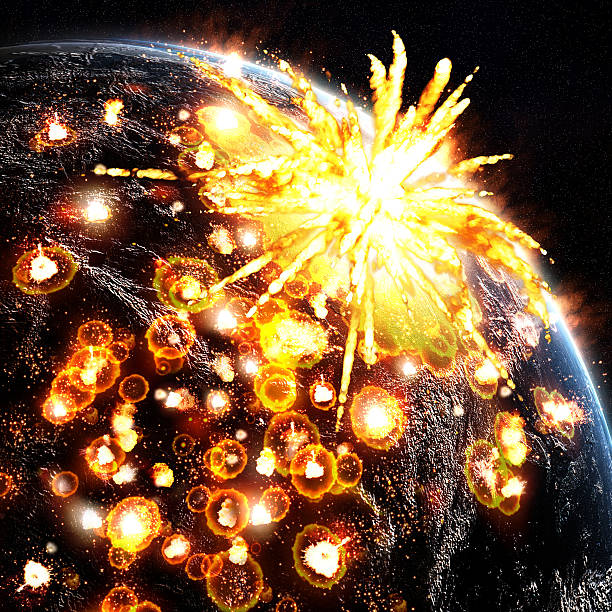
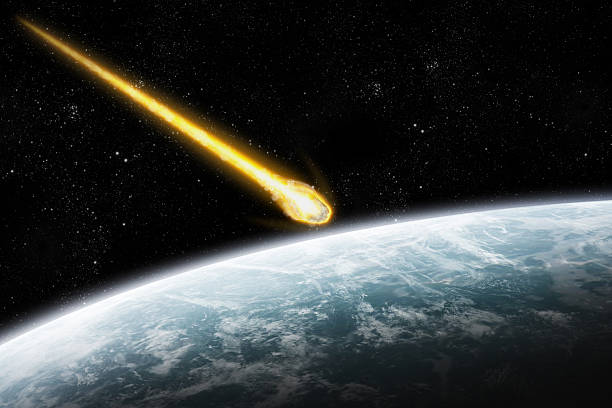
Earth is covered with evidence of past impacts from large asteroids, many of which devastated the planet and its ecosystem. Asteroids can have eccentric speed and orbits,and we don’t always see them coming. It’s certain that one day we’ll have another large impact, but what if that day comes sooner than we think? This is theWorldOinfo, and today we’re answering the extraordinary question; what if an asteroid hit Earth? Are you a fiend for facts? Are you constantly curious? Then why not subscribe to theWorldOinfo for more articles like this one? for more fascinating content! Astronomers are constantly monitoring the night sky for dangerous objects. There are plenty of comets, asteroids, and meteoroids whizzing through space all the time, and many even fall to earth. But it’s usually meteoroids, defined as rocky or metallic objects one meter or smaller in diameter, that actually enter the Earth’s atmosphere. They create phenomena like shooting stars and meteor showers, while being essentially harmless. Asteroids, defined as at least one meter or more in diameter, are a different story.
What If An Asteroid Hit Earth? | Explained | theWorldOinfo

When one comes within 30 million miles of us, it’s classed as an NEO, or “Near Earth Object''; large NEOs are monitored in case they come closer and become PHAs, or Potentially Hazardous Asteroids. If anything is going to smite planet Earth,it will be a PHA. The good news is that with so many scientists dedicated to searching the skies, we’ll more likely than not see a deadly asteroid coming, giving us time to prepare; we’d have much more of a heads-up than with natural disasters like hurricanes or volcanoes. NASA has several ideas on how we could potentially divert or destroy an asteroid heading towards us, ranging from shooting it down with nuclear bombs to using a gravity tractor to move it onto a safer course. But none of these are methods we have at our disposal just yet. And even if NASA had enough warning to build them in time, there’s no guarantee that they’d work. So, what would we do? If a doomsday asteroid were gunning for Earth And we couldn’t move it out of the way, what would happen to us? 
What If An Asteroid Hit Earth? | Explained | theWorldOinfo

The most obvious point of comparison is theChicxulub Impactor, the giant asteroid that killed the dinosaurs 66 million years ago. This asteroid is estimated to have been over six miles in diameter and created a blast of thermal energy so strong that everything within a 600-mile radius was obliterated in a matter of seconds. Researchers say that if you were close enough to see it, you would have died. It’s theorized that when the Chicxulub Impactor Hit, it threw up so much dirt and debris that the sun was blocked out, leading to an ice age. It also may have caused a tsunami over a thousand feet high and an earthquake measuring at least a 10.1 on the Richter scale. This is significantly stronger than the largest earthquake ever recorded; that was the 1960 Valdivia Earthquake, which measured 9.5. The destruction wrought by the Chicxulub Impactoreradicated over 75% of Earth’s species and was one of the most devastating events in the planet’s history. But the Chicxulub Impactor was only one asteroid. Roughly four billion years ago, there was an event known as the Late Heavy Bombardment. Though scientists debate its existence, ifit did happen, the evidence suggests that Earth, the moon, and the other inner planets were all bombarded with a huge number of asteroids. A true cause has never been pinned down, buttheories range from a rogue planet disturbing the asteroid belt to the formation of Uranusand Neptune.
What If An Asteroid Hit Earth? | Explained | theWorldOinfo

If something like this were to happen again,we’d be in more danger than even another Chicxulub-sized asteroid would bring. No matter what size an asteroid is, there are only two places it can strike Earth: the land or the sea. Lucky for us, 71% of Earth’s surface is water, making it ultimately more likely that an asteroid will land in the ocean. This doesn’t mean that the impact will leave us safe though – far from it. As with the Chicxulub Impactor, it would still be able to create an enormous tsunami. How deadly would depend on how far out the asteroid struck, but coastal evacuations would be necessary. At least we know how tsunamis behave and how to deal with them, and we’ve already experienced tsunamis even larger than the one Chicxulubmay have caused in the recent past; the 1958 tsunami in Lituya Bay, Alaska had a run-up height of 1,720 feet and was caused by rockfall from an earthquake. Given, say, 20 years warning of an incoming asteroid, we’d have lots of time to try and chart its trajectory and work out where would be most at risk. This means that even if the tsunami struck an area where tsunamis aren’t common, that is, somewhere far from a fault line or plate boundary, there’d be adequate time to draw up evacuation plans and build defenses. Cities would certainly be destroyed, but with so much prep time, hopefully, few lives would be lost. But what if it struck land? The two most recent, large asteroid strikes on Earth – the 1908 Tunguska Event and 2013 Chelyabinsk meteor – both did, after all. The Chelyabinsk meteor is unique because it was caught on video and widely reported.

Also Read
What if Earth Never Had Humans? Explanation
How Many Dimensions Are There? Explanation

It exploded over Russia early on the morning of February 15th, causing an enormous shockwave that shattered windows and damaged buildings. Nobody died, but 1,500 people were injured,almost all as a result of broken glass. By contrast, there were no records or good eyewitness accounts of the Tunguska Event because it was in such a remote part of Siberia. The event had to be reconstructed from the destruction it left behind, which included flattening nearly 800 square miles of forest;the asteroid still exploded far enough above the planet’s surface to avoid leaving an impact crater. But though these two encounters have led to few, if any, human casualties, that doesn’t mean the explosions weren’t potentially deadly. Frighteningly, the Chelyabinsk meteor went undetected until it entered Earth’s atmosphere, and it's explosion had a blast yield equivalent to 500 kilotons of TNT, making it at least 26 times more powerful than the atomic bomb dropped on Hiroshima. Tunguska was even more violent, and it's blast yield may have been as high as 30 megatons. That’s more than strong enough to level an entire city. The only upside is that at least an asteroid wouldn't cause vast quantities of radioactive fallout like a nuclear bomb. That’s not to say there wouldn’t be wide environmental ramifications, though. If there were enough ash and dust to trigger a new ice age, we would definitely start to see extinctions, perhaps even our own. And even if it were smaller, many species endemic to the environment in which it impacted would also be threatened. An asteroid one mile across or bigger – which is still much smaller than the Chicxulub Impactor – could potentially obliterate life on Earth. Smaller asteroids would have effects akinto a huge earthquake or volcanic explosion and could trigger eruptions in its wake. The only silver lining is that we’d have so much time in advance to prepare contingencies. We’d have to deal with a fiery and violent explosion, deadly earthquakes, enormous tsunamis, widespread deaths and panic, and potentially another mass extinction depending on where the asteroid landed. And that’s what would happen if an asteroid hit Earth. What do you think? Is there anything we missed? Let us know in the comments, check out these other articles from theWorldOinfo, and make sure you subscribe for our latest content. 

Recommendations

What if Earth Never Had Humans? Explanation

How Many Dimensions Are There? Explanation

What's inside a black hole Black holes


How Many Dimensions Are There Explanation

How Many Dimensions Are There Explanation

How Many Dimensions Are There Explanation
How Many Dimensions Are There? Paintings are artistic representations of the world on a two-dimensional canvas. And for a long time, that’s all that painting could be. It wasn’t until the Middle Ages when artists started toying with perspective and figured out that they could represent the three-dimensional world on a two-dimensional canvas. We similarly assume that our world has four dimensions, three of space and one of time, but isn’t it possible that there are more dimensions we just haven’t discovered yet? This is theWorldOinfo and today we’re answering the extraordinary question: How Many Dimensions Are There? Are you a fiend for facts? Are you constantly curious? Then why not subscribe to theWorldOinfo for more articles like this one? for more fascinating content! Human beings perceive space in three-dimensions- length, width, and height. A line exists in one dimension because it only has length. A square exists in two, as it has length and height. And a cube is three-dimensional because it adds depth. A tesseract, on the other hand, is a geometrical concept that represents a cube in four dimensions. We can’t accurately envision what this would look like, but just because we can’t see something doesn’t mean that it doesn't exist.
How Many Dimensions Are There Explanation

A number of theories about the universe posit that we actually live in many more dimensions than we think. The holy grail of physics is a Theory of Everything That explains all the phenomena we see in the universe, reconciling general relativity and quantum field theory. General relativity, which focuses on gravity,does a great job of explaining the universe at large scales; and quantum field theory,which focuses on electromagnetism, the strong nuclear force, and the weak nuclear force,works well at small scales. (The strong nuclear force is what holds atoms together; the weak is responsible for radioactive decay.) The problem is, general relativity and quantum field theory are incompatible! String Theory is the leading candidate for a theory that combines them, providing a unified description of all four fundamental forces. In order to do so, it posits a whole bunch of other dimensions hidden from our view to make the math work out. But . . . where could they be hiding? Our first “new” dimension came when Einstein Created his theories on relativity in the early 1900s. Previously, the world was understood geometrically as existing in three dimensions. But Einstein was struggling to explain electromagnetism until he considered time as a fourth dimension. The same principle was also able to explain gravitational fields. In his equations, all four dimensions are bound together in what we call spacetime. This provided a powerful new tool with more explanatory power and more accurate predictions than in Newtonian physics. It’s a similar case to our painting example- there exists another dimension right alongside us, we just never realized it until Einstein's Theories of special and general relativity. Immediately after Einstein’s proposal, others thought about adding new dimensions to better explain our universe. In 1919, mathematician Theodor Kaluza tried adding a fifth dimension into Einstein’s equations, and surprisingly, it fit perfectly. When trying to explain where this dimension is located, physicist Oskar Klein gave the example of an ant crawling on a hose.
How Many Dimensions Are There Explanation

To the ant, it seems like he’s walking on a two-dimensional object, but in fact there’s a circular dimension on the inside of the horse right below the ant’s feet. In subsequent decades, this idea underwent a series of revivals, as string theorists tried adding more dimensions to unify the forces of nature. According to superstring theorists, there are at least 10 dimensions in total: four regular dimensions, and six smaller, compact dimensions that curl up in on themselves to form a structure called a Calabi–Yau manifold. While this structure is impossible to imagine in its entirety, there are 2D cross-sections of what it’s thought to look like. Ten dimensions seems like a lot, but that's not even the most that physicists are willing to consider. The most popular variation of string theory M-theory, which assumes 11 dimensions! Oddly enough, M doesn’t stand for anything in particular, with Edward Witten, the theory’s creator, suggesting that it could stand for“magic”, “mystery”, or “membrane”. Then there’s also Bosonic String Theory,the original version of string theory developed in the 1960s. Bosonic string theory posits that there have to be 26 dimensions in total, 25 of space and one of time. While it may initially seem unlikely that we'd only be able to see 3 dimensions in a universe of 26, it may be analogous to the fact that humans can only perceive a minuscule amount of the visible light spectrum.
How Many Dimensions Are There Explanation

 If we didn’t need to see these dimensions to survive, maybe we never evolved to. Again, what these extra dimensions are impossible to imagine, but for now, physicists say they’re rolled up and compacted in theCalabi-Yau manifolds. We just can’t experience these dimensions because they’re too small. Quantum mechanics adds another layer of complexity to the situation. At a quantum level, the world doesn’t act at all how we expect it to, and things occur that are impossible to experience at the macro level. According to the many-worlds interpretation,quantum mechanics even calls for the existence of infinite universes. Strange as it is, this is actually a popular theory. Basically, quantum mechanics seems to show that at atomic and subatomic levels, physical systems don’t have definite properties until they're measured; the many-worlds interpretation posits that in fact, all possible outcomes are realized, just in different worlds. Thus, there could also be many other “dimensions”in another sense: other worlds existing right alongside ours. Think of it like a length of rope - although it appears to be one long object, on closer inspection there are hundreds of tiny threads alongside each other. There’s no telling yet how many dimensions there truly are. Mathematics shows us a number of possible dimensions, but that doesn’t mean they’re real. The problem with math is that it’s extremely creative and abstract and can be consistent on paper without necessarily representing the material world. For example, we represent dimensions in math with coordinate axes. We usually have three: x, y, and z. But we can add dimensions as easily as adding more letters - even if it’s impossible to draw. Proving their existence is another feat entirely.
How Many Dimensions Are There Explanation

These extra dimensions may be too small to see, but maybe we do experience their interactions with our world. Some researchers have postulated that consciousness exists in another dimension - so it’s possible that one or more dimensions actually exist in our own head, so to speak. Or perhaps death opens alternative dimensions to our comprehension, and the afterlife exists in its own dimension. Perhaps dark matter and dark energy hold the key to understanding where these other dimensions are, as both are completely invisible but account for most of the matter and energy in the universe. In fact, according to observations, observable matter and energy account for only 5% of the universe’s total. If there are 26 dimensions, perhaps the rest is tucked away there! Either way, the fact that so many dimensions can possibly exist in math highlights just how little we know about the universe. And that’s How Many Dimensions ThereCould Be. What do you think? Is there anything we missed? Let us know in the comments, check out these other articles from theWorldOinfo, and make sure you subscribe for our latest content.

Recommendations
What if Earth Never Had Humans? Explanation
What If An Asteroid Hit Earth? | Explained | theWorldOinfo
How Many Dimensions Are There? Explanation
What's inside a black hole Black holes


Explore topic clusters